
Dukes Projected Versus Actual Release
A projected or calculated date is not the same as the exit that staff complete. MADOC defines a “Release Date” as the date calculated from sentence terms before earned deductions, used as a basis for an actual release date. Other official terms include the maximum date, minimum sentence date, earliest release date, and release to supervision date. Each answers a different question.
A pretrial Dukes County detainee has no set sentence expiration because no custodial sentence has been imposed. Bail, personal recognizance, dismissal, or another court order may end that custody. A county-sentenced person follows house-of-correction rules. A state-prison sentence is structured by the Massachusetts Department of Correction. Transfer to another agency can end custody at one facility while custody continues elsewhere.
Even the phrase “scheduled release” needs context. It may mean a maximum expiration, an earned-credit projection, a parole eligibility milestone, or an internal date used to plan discharge. Ask the record custodian which term is being shown and whether later credits or orders have been posted. That small check prevents a lawful eligibility date from being repeated as a firm promise of release.
- Mittimus
- The court’s written commitment directing the sentence and custody.
- Jail credit
- Credit the court or law allows for time already confined.
- Detainer
- A hold or request from another authority that may control what happens next.
- Discharge
- The formal end of the sentence or custody covered by the record.
Find a Dukes Release Date
Begin with the physical custodian. Dukes County Jail and House of Correction holds male pretrial detainees and county-sentenced men. Barnstable County Correctional Facility can hold women in Dukes cases. MADOC handles a later state-prison sentence. Using the wrong agency creates a common dead end because MADOC expressly does not process county jail or house-of-correction requests.
- Identify the present or last facility from the court docket, release paper, or known booking details.
- For a pretrial case, review the Edgartown District Court or Dukes County Superior Court docket for bail, recognizance, dismissal, warrant, or custody orders.
- For a Dukes house-of-correction sentence, call 508-627-5173 or request the existing computation and release record from the sheriff.
- For a person held at Barnstable, use that sheriff’s records route and include the Dukes docket and date range.
- For MADOC custody, search by full first and last name or commitment number, then request the final computation or certificate when the public view is not enough.
- Check for a receiving agency, parole action, warrant, detainer, or later sentence before treating departure as community release.
The official MADOC locator instructions route current state custody searches through VINE and document only the two search inputs.
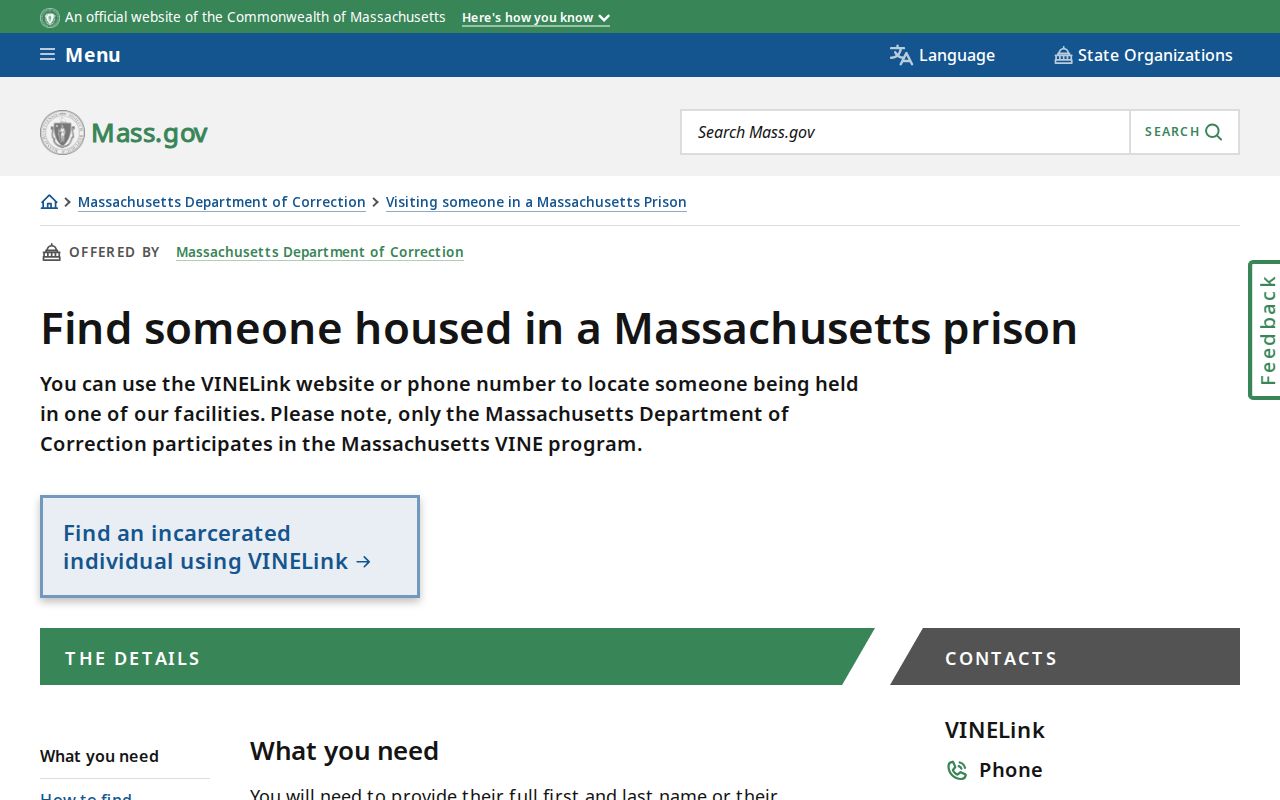
The official page does not promise a projected date, released-person archive, photograph, or post-release retention period. A no-result is not proof of release.
For a broad release-record search after the event, use the process on the Dukes County released inmates page. That route joins the facility record to the court disposition.
Dukes Release Date Terms
The MADOC glossary supplies the terms used by state sentence administrators.
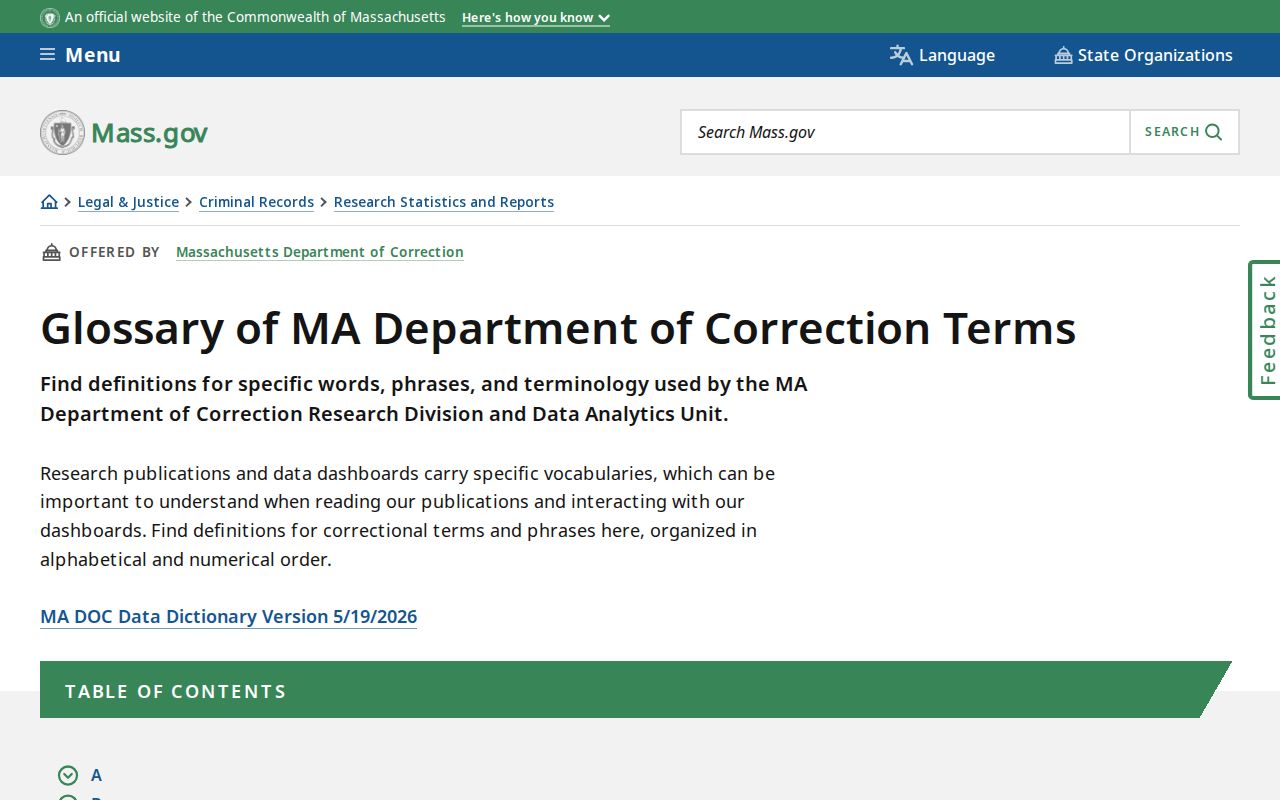
These definitions help read a computation without turning an eligibility milestone into a promised exit.
| Official term | What it means |
|---|---|
| Earliest Release Date | Earliest eligibility after applicable parole rules and eligible deductions |
| ERD Max | Earliest release based on the maximum and eligible deductions, without parole eligibility |
| Maximum Date | Date the imposed sentence expires |
| Minimum Sentence Date | State-prison date that commonly controls ordinary parole eligibility |
| Release Date | Date calculated from sentence terms before deductions |
| Release to Supervision Date | Statutory date based on the maximum and eligible credits |
| Actual release | The event carried out after all controlling orders, credits, holds, and processing |
Parole eligibility is only the date when the Board may consider release. For many house-of-correction terms of at least 60 days, 120 CMR 200.00 generally places eligibility at one-half of the aggregate term or two years, whichever is shorter, subject to exclusions and mandatory minimums. A hearing or eligible date never guarantees a grant.
Dukes Sentence Date Computation
103 CMR 410.00 assigns MADOC’s Central Date Computation Unit the state-prison work of executing sentencing orders, building the sentence structure, and calculating release dates. The inputs may include the offense and statute, court and docket, mittimus, sentence terms, date imposed, jail credit, concurrent or consecutive terms, parole or probation returns, escape time, corrected orders, and changes in earned credits.
Concurrent sentences run at the same time to the extent the order provides. Consecutive sentences run one after another. A corrected mittimus can change the structure. So can a new jail-credit order. The unit also prepares the Certificate of Discharge or Release used for final processing. Its internal upcoming-release list is not a public Dukes County feed.
County computation uses the same need for source documents even though MADOC’s central unit does not own a Dukes house-of-correction file. The sheriff must apply the controlling county sentence, lawful credits, and court orders. Edgartown District Court and Dukes County Superior Court keep the legal orders for their cases. When the docket summary is unclear, request the mittimus or certified order from the correct clerk rather than asking the clerk to calculate the date.
For someone already released from state custody, request the signed certificate and final computation. MADOC accepts requests through its public-record request route, doc.rao@state.ma.us, 508-422-3436, or mail to its Primary Records Access Officer at 50 Maple Street, Milford, MA 01757. A released person or authorized representative may use the duplicate-certificate procedure in the sentence-computation rule.
Dukes Earned Release Credits
M.G.L. c. 127, §129D sets current program and activity deductions. A state-prison deduction can be up to 7.5 days for each qualifying activity in a month, capped at 15 days monthly. A house-of-correction deduction can be up to five days per qualifying activity, capped at ten days monthly. Separate completion credits may apply under the statute.
For a state prisoner, a designated completion can produce up to 80 days, but aggregate completion credits cannot exceed 17.5 percent of the imposed maximum. Across applicable deductions, the statute bars reducing the imposed aggregate maximum by more than 35 percent and limits the effect on the minimum used for parole eligibility. A house-of-correction completion credit of up to ten days requires a designated program with six months of satisfactory participation.
The current earned-time statute is the source for those limits.
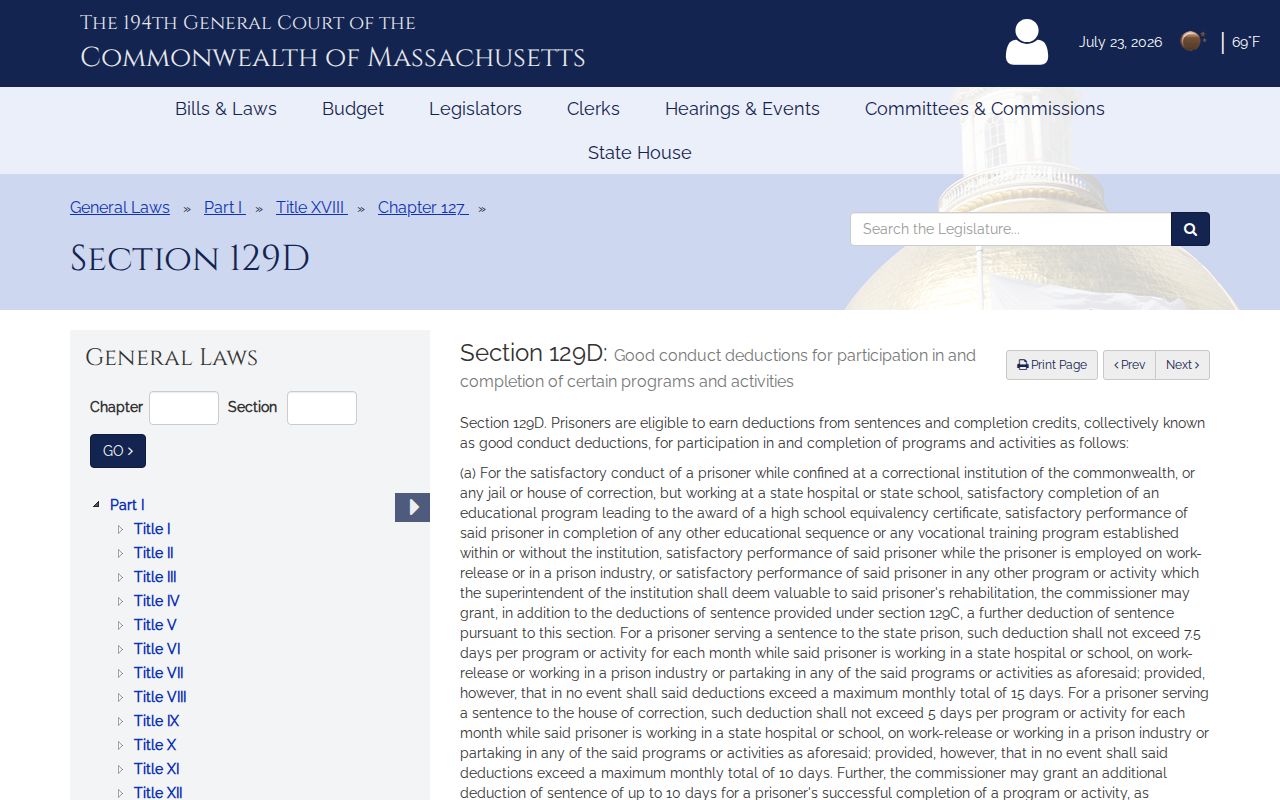
Program participation does not guarantee the maximum credit. Offense-specific minimums and eligibility rules can also limit a deduction.
The 1994 truth-in-sentencing change ended the older general statutory good-time system for newer offenses, but it did not create one universal current percentage. Use the real sentence, lawful credits, jail credit, mandatory minimum, and controlling orders.
Dukes Release Dates Can Change
Even a correct estimate can move before physical discharge. The cause should be traced to a court, agency, or statutory record rather than guessed from a stale locator result.
| Change | Possible effect | Best record |
|---|---|---|
| Corrected sentence or mittimus | Changes term, credit, or sentence structure | Court order and final computation |
| Earned credit | May move an eligible date earlier | Agency computation |
| Forfeited or restored credit | May move the estimate later or earlier | Disciplinary and computation record |
| Parole vote | May allow release, be postponed, rescinded, or revoked | Parole Board record |
| Warrant or detainer | May shift the person to another custody | Release record naming receiving authority |
| Another sentence | May keep custody active after one term ends | All linked dockets and computation |
| Weekend or holiday | Can alter a sentence-expiration discharge date | Statute and final release record |
A parole grant is not always community release. It may lead to another sentence, interstate supervision, ICE, or another facility. A county sheriff’s release timestamp is stronger evidence of when local custody ended than the date of a court order alone.
Credit loss must also be documented. A missed program does not automatically prove that the maximum credit was lost, and completion of a listed program does not prove that the full deduction was awarded. The final computation should show the credits actually applied. If a date changed after a discipline decision, request the relevant computation history and the releasable decision record instead of trying to rebuild the result from a program calendar.
Dukes Weekend Release Date Rules
Massachusetts has two distinct timing rules. Under M.G.L. c. 127, §150, a sentence-expiration discharge moves to the preceding day when the term ends on Saturday, Sunday, or a legal holiday. This can make the actual expiration discharge earlier than the calendar date.
A different statute, M.G.L. c. 279, §6A, applies to certain court-authorized weekend or periodic sentences for first offenses with terms no longer than one year. Unless the court orders otherwise, its default schedule is reporting by 6:00 p.m. Friday and release at 7:00 a.m. Monday. A Monday holiday shifts that release to 7:00 a.m. Tuesday.
The preceding-day discharge law is shown in the official source capture.
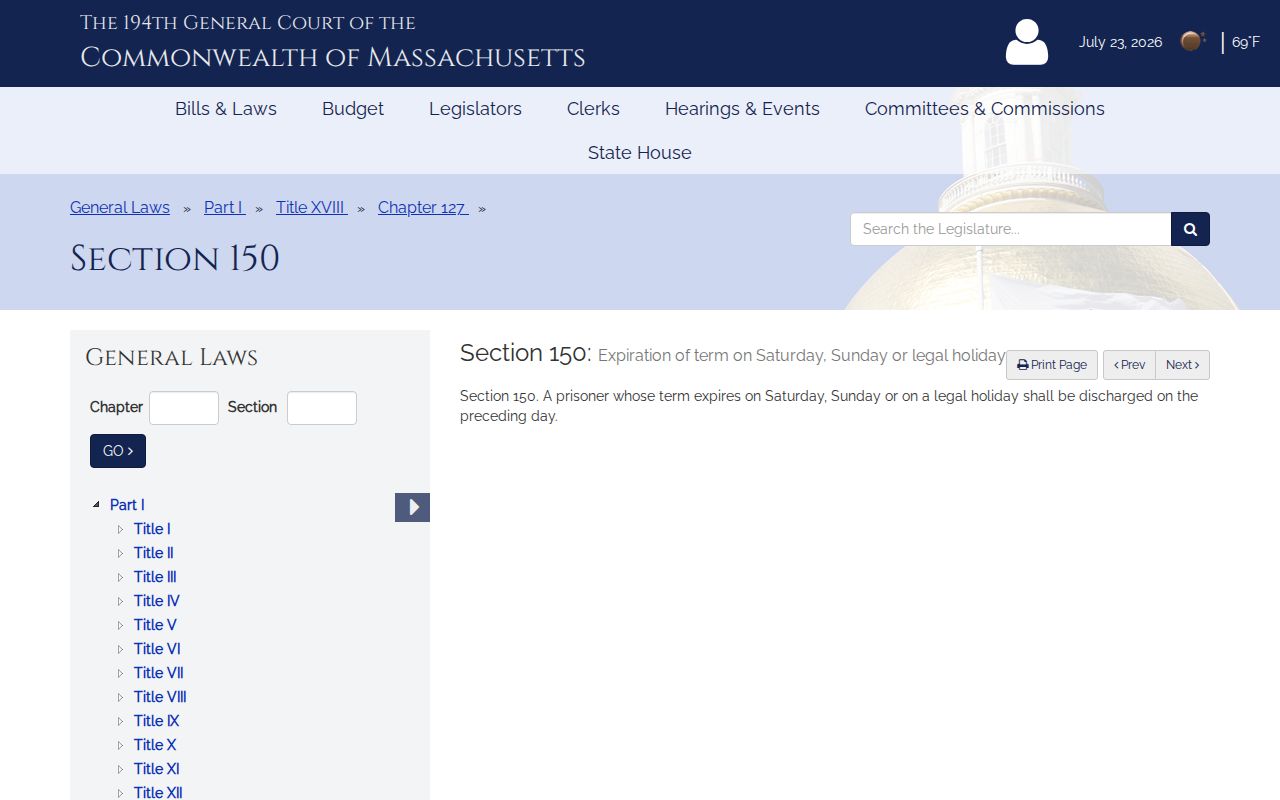
Neither statute creates a general Dukes County jail release hour. Ordinary continuous sentences, court releases, and transfers still follow their own processing.
Confirm Dukes Actual Release
Use the certificate or release record after the event. For Dukes jail custody, ask the sheriff for the actual release date and time, legal release category, and receiving agency if any. For Barnstable custody, make that request to Barnstable and pair it with the Dukes court order. For state prison, obtain the final MADOC computation and certificate.
The DCSO Records Access Officer can be reached at records@dcsoma.org, 508-627-5173, fax 508-627-8496, or P.O. Box 252, Edgartown, MA 02539. Describe the person, booking, court, and approximate release range. Ask for electronic copies and a fee estimate. DCSO posts no flat release-record fee or guaranteed production date, so the response may provide records, seek clarification, quote cost and time, or cite a lawful reason for withholding.
A future status alert can help track a pending MADOC change, but it is not a historical certificate. Massachusetts says only MADOC participates in the state VINE program. The VINELink Release Check explains that narrow coverage and notification process.
Note: A transfer date proves departure from one custodian, not release from every form of custody.