
Dukes Parole and Probation
Parole follows incarceration. The Massachusetts Parole Board may let a person serve the rest of a sentence in the community under set terms, while the Board keeps jurisdiction until the sentence ends or supervision lawfully terminates. Probation is a court sentence or disposition overseen by the Massachusetts Probation Service. It may begin without jail, follow a jail term, or arise in a separate case. A Dukes County release sheet may name a supervision destination, but it does not replace the supervising agency’s record.
The distinction controls the search. Parole questions go to Board records, hearing material, and field services. Probation questions begin with the criminal docket and the Probation Department attached to the sentencing court. Neither agency offers a general public name search for all adults currently under supervision.
A person may also have both forms of supervision in different cases. One docket might impose probation after a short county sentence while an older state case remains under Parole Board jurisdiction. In that situation, one office cannot provide the full answer. Record each docket number, sentence, court, and agency separately. Then compare the start and end terms rather than assuming that the newest release paper cancels the older order.
| Point | Parole | Probation |
|---|---|---|
| Source | Release from an incarceration sentence | Court sentence or disposition |
| Authority | Massachusetts Parole Board | Massachusetts Probation Service and sentencing court |
| Best proof | Certificate of Parole, Board record, or authorized file | Docket, probation order, or authorized status report |
| Public lookup | No complete statewide active-parolee search | No general public adult status lookup |
| End point | Sentence expiration or lawful termination | Court-ordered termination or term completion |
- Parole
- Community service of the remaining part of an incarceration sentence under Board conditions.
- Probation
- A court-ordered term in the community, sometimes before or after custody.
- Discharge
- The formal end of custody or supervision, not merely removal from a live roster.
- Absconder
- A supervised person whose location is unknown after required contact stops.
Verify Dukes County Supervision
Start with the court and release path, not a broad name search. Massachusetts restricts person-level probation information, and the public parole materials cover only selected proceedings. The following sequence avoids treating silence as proof.
- Use the MassCourts portal and the correct docket number when possible. Look for a probation term, start or end date, conditions, violation entry, extension, revocation, or termination.
- Match the court. Edgartown District Court handles many island criminal matters. Dukes County Superior Court handles superior criminal cases.
- For probation, ask the sentencing court’s Probation Department about its access process. Expect status details to require the person’s signed authorization or another defined legal right.
- For parole, check public life-sentence calendars or decisions only when the case fits that category. Otherwise use the Parole Board records route.
- Compare the record with the person’s Certificate of Parole, probation order, or release papers when voluntarily provided.
- If a warrant or immediate safety concern exists, contact police, the court, victim services, or the Board’s named reporting channel.
A released person can be absent from the jail roster and still be under supervision. The reverse also matters. A docket showing probation does not prove that the term remains active today, and an absent life-sentence decision says nothing about an ordinary parole case. The broader Dukes County release-record path is explained on the released inmates home page.
Official Massachusetts parole hearing materials show the split between institutional, life-sentence, and victim-access proceedings.
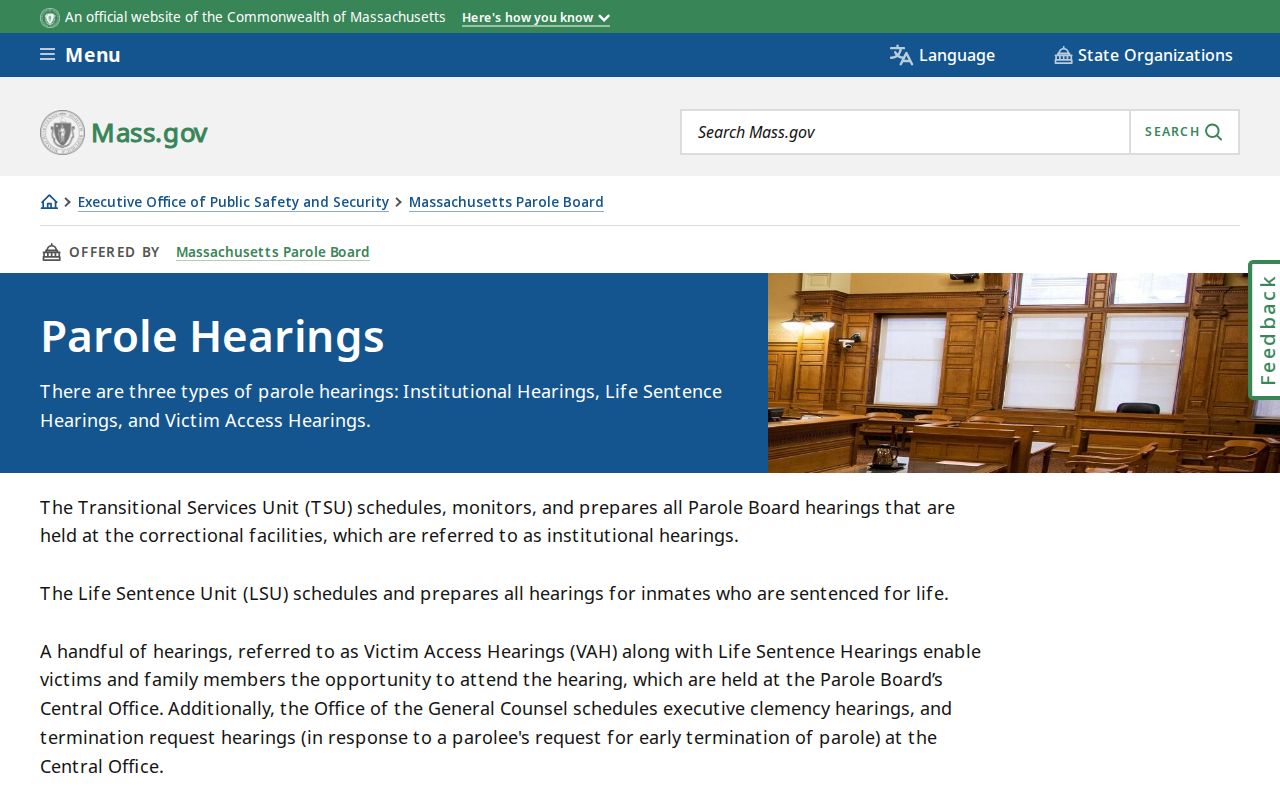
The public hearing pages are useful for the proceedings they cover, but they are not a complete Dukes County parole roster.
Dukes Supervision Office Routes
Dukes County has split island and mainland channels. The Edgartown District Court has a local adult Probation Department at 81 Main Street. District Probation uses P.O. Box 1291, Edgartown, MA 02539 and 508-627-4291. The court’s official location page is the best source for current staff and hours because assignments can change.
The Dukes County Superior Court shares the courthouse, but its public probation contact routes through Barnstable. Superior probation is listed at Route 6A Main Street, P.O. Box 1240, Barnstable, MA 02630, with telephone 508-375-6650. Sharing a courthouse does not mean the two departments share files or supervision staff.
Massachusetts Parole Board
12 Mercer Road
Natick, MA 01760
508-650-4500 or 866-480-6272
Monday-Friday, 8:45 a.m.-5:00 p.m.
Records: par.rao@state.ma.us
The current Board directory states that Dukes County House of Correction has no on-site parole office. Institutional calls route to Barnstable HOC at 508-563-4347. That number concerns institutional and pre-release routing. It does not prove which field office a person reports to after community release. Call the central office to identify the responsible regional office.
Dukes Parole Hearing Records
The Parole Board’s public calendars and decisions are narrow. The Life Sentence Hearing Calendar publishes monthly files for life cases. The Life Sentence Records of Decision archive posts named decision files by year. Neither source is a results database for every parole applicant.
Institutional hearings are closed to the public. A positive vote may authorize release to a field region, another sentence, interstate supervision, ICE, another correctional facility, or another lawful destination. It need not mean a same-day return to Dukes County. A rescission hearing can withdraw or postpone a prior vote, while a revocation hearing can suspend or revoke parole after an alleged violation.
The Parole Supervision hub describes regional field work, warrant functions, and supervision services.
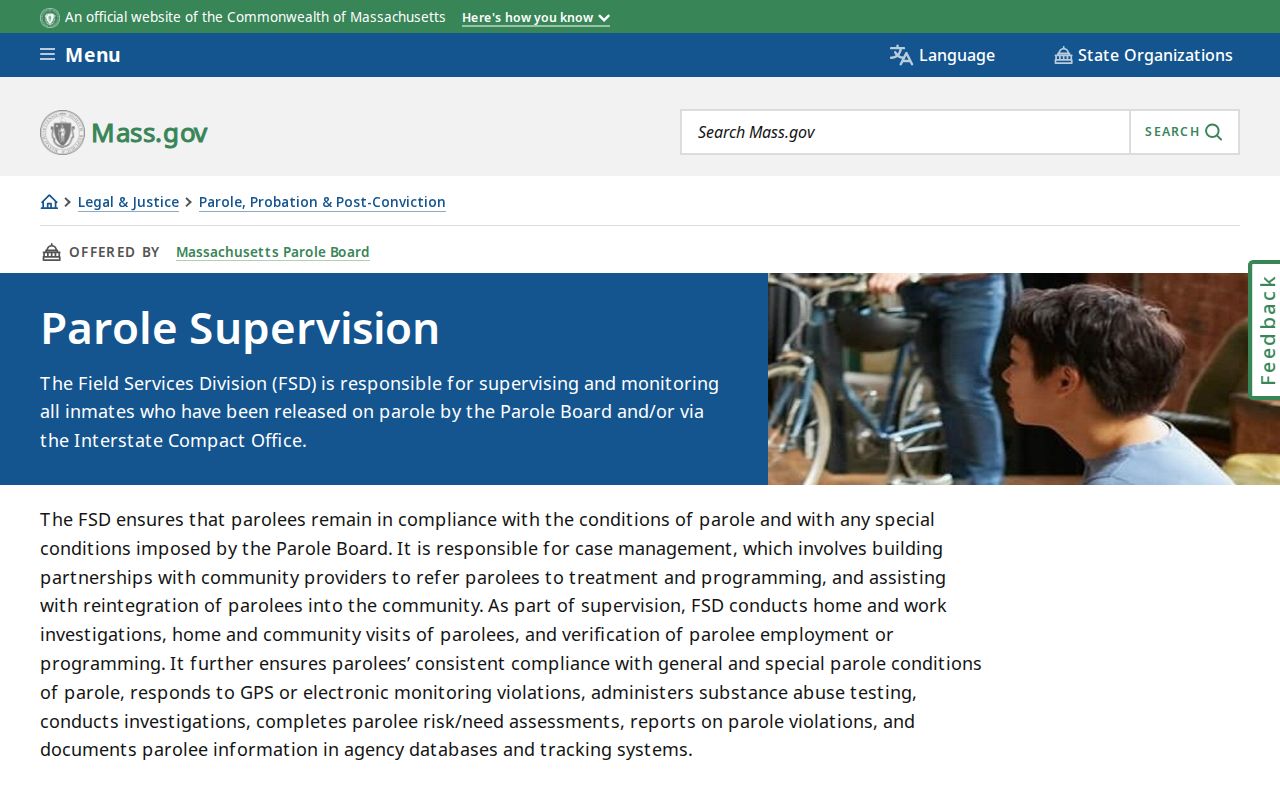
Use that hub to reach the current directory or report route, not to infer a person’s status from the absence of a name.
Board jurisdiction usually continues to the maximum sentence expiration unless the law permits an earlier termination. For ordinary state-prison cases, M.G.L. c. 127, §133 ties eligibility to the court-set minimum as adjusted by lawful credits. Life-sentence proceedings use the separate framework in §133A. For a Dukes house-of-correction term, 120 CMR 200.00 supplies the general half-term or two-year eligibility rule for qualifying aggregate sentences of at least 60 days, subject to mandatory minimums and exclusions. Eligibility permits consideration. It does not guarantee parole.
Dukes Release Warrants and Violations
An absconder has stopped required contact and cannot be located by the supervising agency. That is not the same as completing supervision. A parole or probation warrant may lead to arrest and renewed custody, but a public docket may show only part of the process. The Parole Board offers a wanted-parolee reporting channel, yet no full Dukes County absconder list is published.
“Released” also does not mean “free of every hold.” Massachusetts release categories include release to a warrant and transfer to another criminal-justice agency. Confirm the exit from the first facility and then identify the receiving case or agency. A live jail roster may show the new custody only after processing.
Conditions differ by case and order. Common supervision work can include reporting, approved residence, treatment, travel limits, or compliance with court and Board terms, but only the signed certificate or order states the terms for one person. An alleged breach can lead to a hearing. It is not itself a final finding.
VINELink is not a Dukes County supervision lookup. Current Massachusetts guidance says only MADOC participates in the state VINE program, and a custody-change alert does not establish active parole or probation. The public Sex Offender Registry Board search is also narrow. It applies only to qualifying registrants whose classification is public, not to all released people or all people under supervision.
Dukes Release Reentry Planning
The Dukes County Sheriff’s Human Services staff build individual care plans and coordinate with island providers and volunteers. Published programs include education, mindfulness, parenting, mental-health presentations, addiction-focused support, self-help, and road-crew activity. These services can help prepare a person for release, but participation does not prove parole, alter a court order, or guarantee a result in the community.
The sheriff’s Human Services and facility contact page identifies the local point of contact.
Major Amanda Cimeno, RN, is listed at 774-549-6083 and acimeno@dcsoma.org. The contact supports release preparation and service coordination, while the court or Parole Board controls supervision records.
Dukes Release Property Records
Supervision papers are only part of release closeout. Massachusetts schedules sheriff personal-property records for one year after release. A person who believes property or funds were recorded incorrectly should contact the sheriff that physically held and released them. A court docket error instead belongs in the Trial Court correction route.
This split matters for Dukes-connected women held at Barnstable County Correctional Facility. Barnstable lists Inmate Property at 508-563-4368 and Inmate Accounts at 508-563-4317. Its published information says a remaining account balance may be issued by debit card after custody. Those records do not show parole or probation status, but they can document a separate part of the release event.
Keep each correction request with the office that made the entry. Barnstable should review its property or account record. DCSO should review an Edgartown release sheet. The Trial Court clerk should address a docket error under court procedures. A parole officer cannot revise a sheriff booking record, and a sheriff cannot alter the court’s probation order.
Dukes Supervision Discharge Records
Parole can end at sentence expiration, through an authorized Board termination, by revocation and return to custody, or through another lawful disposition. Probation ends through the court process that controls the term. Do not treat a closed jail booking or expired roster entry as supervision discharge.
For a parole record, submit a state public-record request, email par.rao@state.ma.us, call 508-650-4500, fax 508-650-4599, or write to Primary RAO Stacy Book at the Board’s Natick address. Current or former parolees and authorized third parties use separate individual-record procedures. For probation, ask the sentencing court about the person’s own file or a signed authorization. The Massachusetts Probation Service states that officers generally cannot discuss an adult probationer’s status with the public without that authorization.
Public Board records may be requested through the state process, but personal parole files can require authorization. Court case records follow judicial access rules rather than the local public-record statute in the same way. State Public Records Law still governs suitable executive-agency requests and permits a response that produces records, quotes time and fees, seeks clarification, or states a lawful basis for withholding.
Note: A Certificate of Parole or court termination entry is stronger proof than a missing online result.